Part 3 of our Bathroom Exhaust Fan Mold Investigation
In the first two parts of our investigation, we explored the visible conditions around a bathroom exhaust fan, reviewed particulate measurements, and discussed the results of laboratory sampling.
But identifying microbial growth is only part of the investigation.
The next question is just as important: What conditions may have allowed the problem to develop?
Looking Beyond the Bathroom Ceiling
Our investigation took us into the attic, where we examined the ductwork connected to the bathroom exhaust fan.
Initially, we suspected that a large HVAC return duct is resting against the bathroom exhaust duct might be restricting airflow. However, the duct did not appear as compressed as originally suspected.
The most significant finding was something we hadn’t initially anticipated.
The bathroom exhaust duct was completely disconnected from the exhaust fan housing.
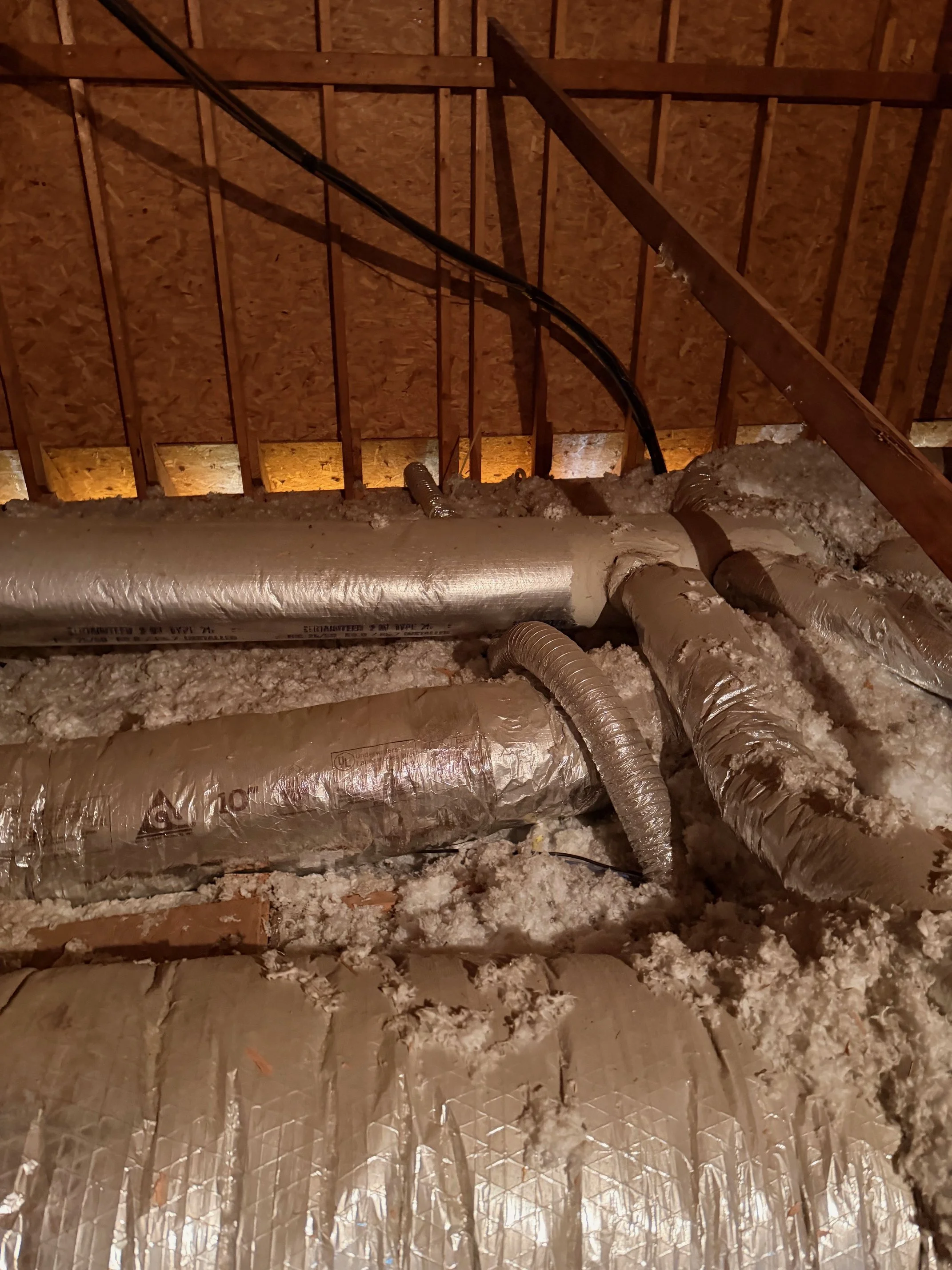
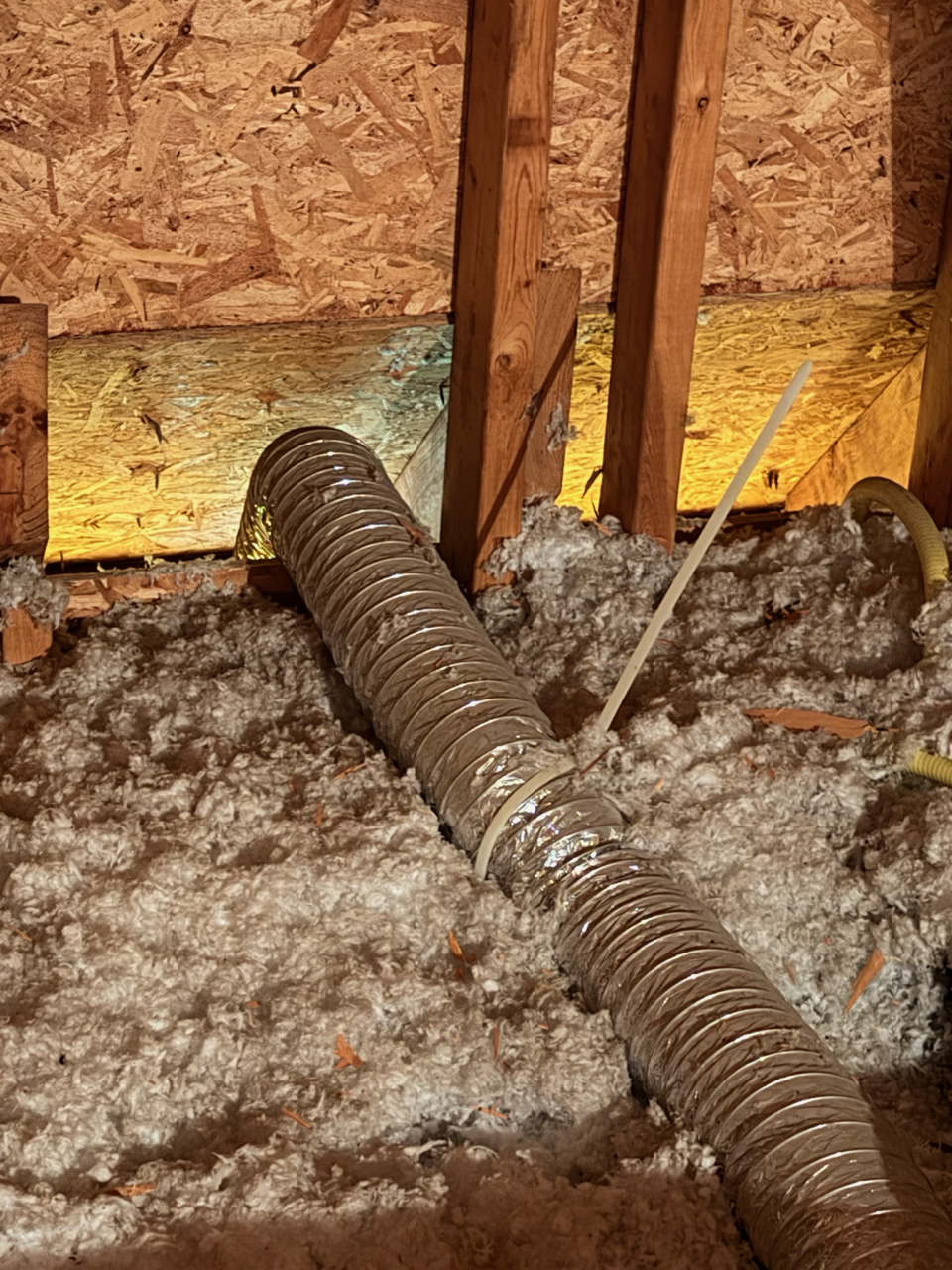
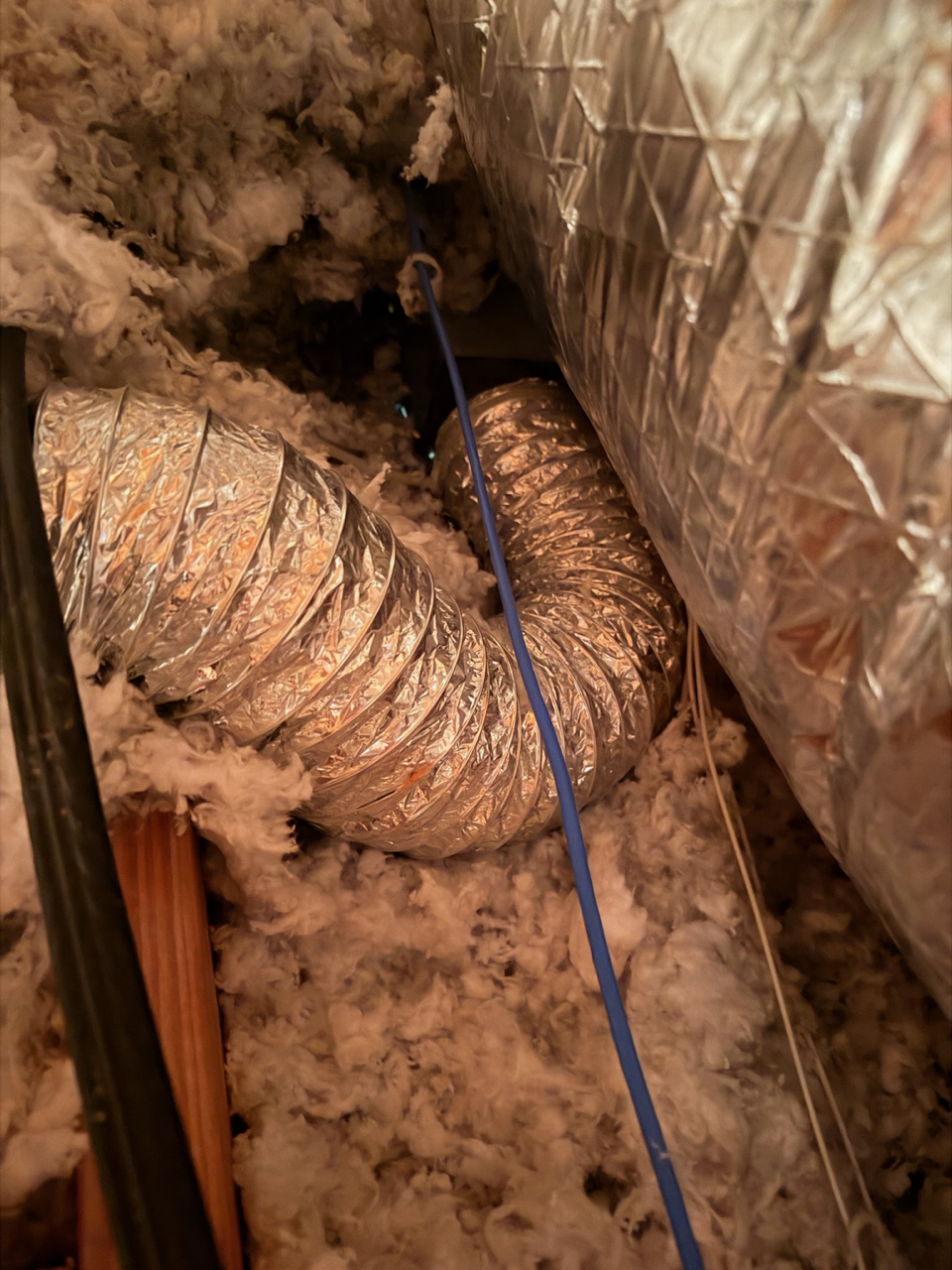
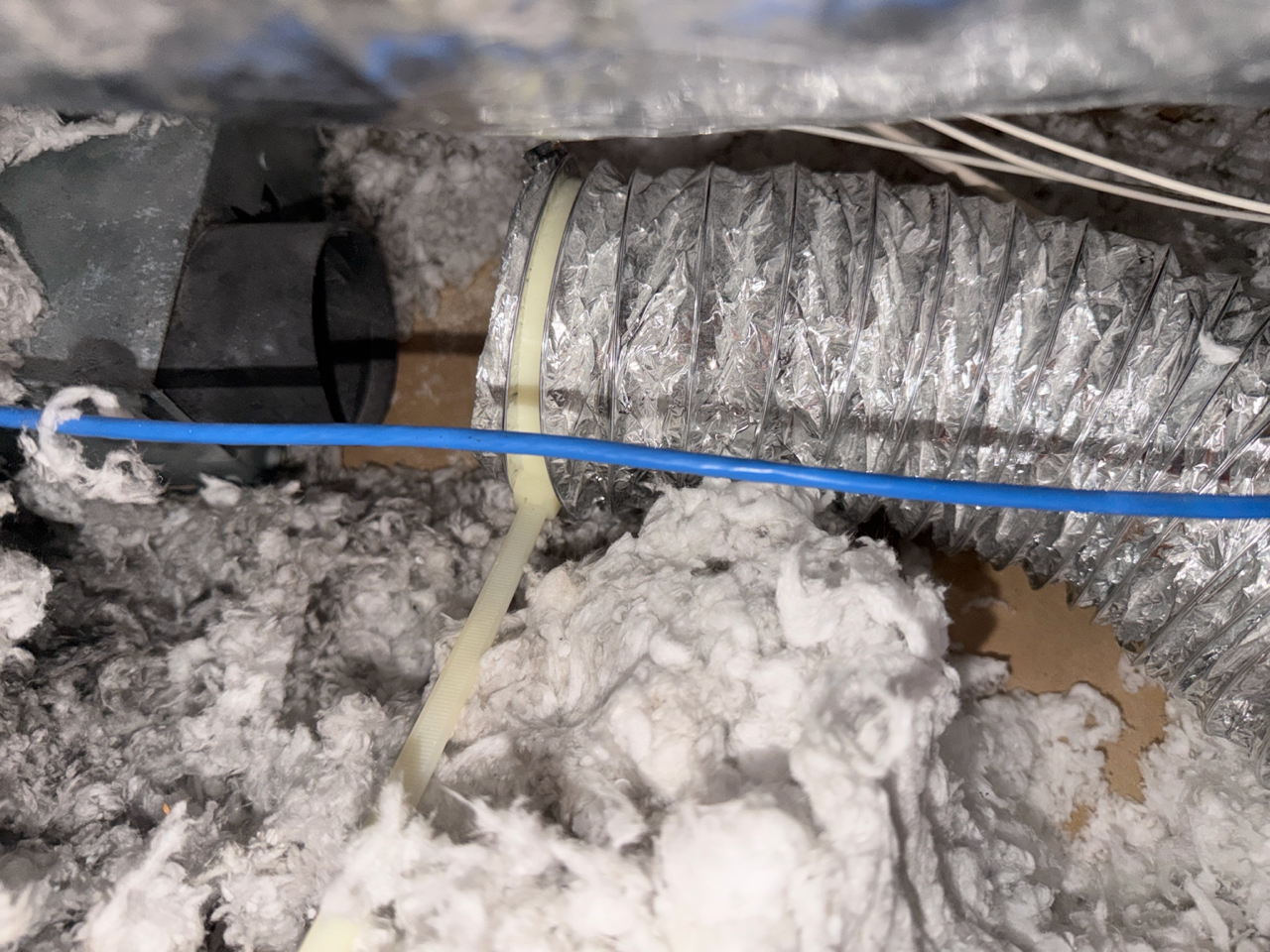
Photos from left to right: Overall attic ductwork, exhaust duct extending toward the soffit, a closer view of the duct beneath the larger HVAC duct, and the disconnected duct at the bathroom exhaust fan housing.
This condition could allow warm, moisture-laden air from the bathroom to discharge into the attic rather than being directed outdoors.
While this finding does not establish the exact cause of the microbial growth identified around the bathroom exhaust fan, it reveals a ventilation defect that warrants correction.
Why Proper Bathroom Ventilation Matters
Every hot shower introduces moisture into the bathroom. An appropriately installed and functioning exhaust fan helps remove that moisture and direct it outdoors.
When an exhaust duct becomes disconnected, obstructed, or improperly installed, the system may no longer remove humid air effectively.
Excess moisture can contribute to condensation on cooler surfaces, including ceilings and areas surrounding exhaust fan housings. When moisture persists, conditions may become favorable for microbial growth.
Our Findings and Recommendations
Based on our observations, we recommend having a qualified contractor:
Properly reconnect and secure the bathroom exhaust duct to the fan housing.
Inspect the ductwork for restrictions, damage, or improper installation.
Verify that the duct terminates outdoors through an appropriate exterior vent.
Confirm that the exhaust fan is moving air effectively.
Evaluate surrounding materials for moisture-related damage and address any identified concerns.
The Importance of Looking Beyond Visible Mold
What began as an investigation of suspected mold around a bathroom exhaust fan led us to discover a ventilation issue hidden above the ceiling.
This case illustrates why identifying microbial growth is only one part of an indoor environmental assessment. Understanding the conditions that may have contributed to its development is equally important.
Mangrove Air & Environmental, LLC provides professional moisture, mold, and indoor air quality assessments in Savannah, Pooler, Richmond Hill, and surrounding coastal Georgia communities.
Concerned about moisture or suspected mold in your home? Contact Mangrove Air & Environmental to discuss scheduling an assessment.