Part 2: From Visual Inspection to Laboratory Results
In our previous blog, we introduced a bathroom ceiling with suspicious discoloration surrounding the exhaust fan.
Was it simply staining from years of bathroom humidity, or was there actual mold growing on the ceiling?
To find out, we took a closer look.
Step 1: The Visual Inspection
Our investigation began with visible discoloration around the bathroom exhaust fan.
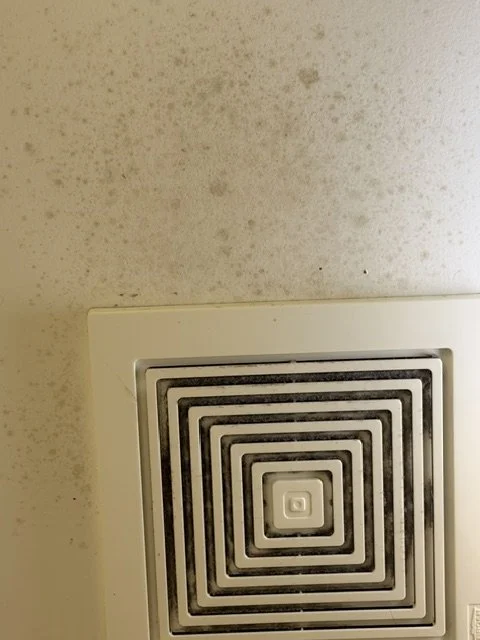
Bathrooms are naturally humid environments, especially during and after showers. When warm, moisture-laden air isn’t effectively removed, it can accumulate on cooler surfaces such as ceilings and walls.
Over time, persistent moisture can create conditions favorable for mold growth.
The location of the discoloration raised an important question:
Was the bathroom exhaust system effectively removing moisture from the room?
But before drawing conclusions, we needed additional information.
Step 2: Measuring Airborne Particles
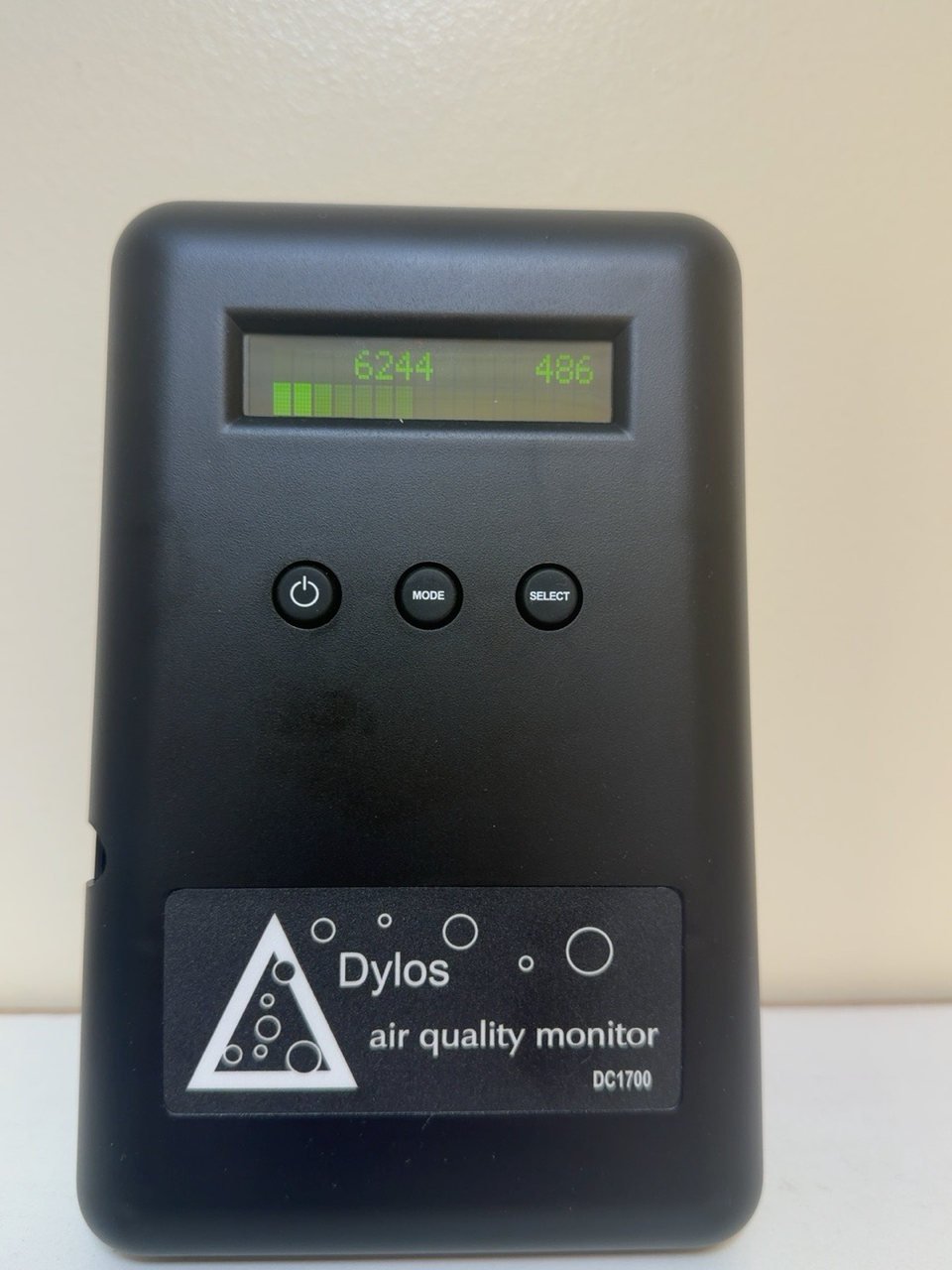
As part of the initial assessment, we used a Dylos DC1700 air quality monitor to measure airborne particles in the bathroom.
The instrument displayed the following readings:
Small particle count: 6,244
Large particle count: 486
These measurements provide information about particles suspended in the air, including dust, pollen, animal dander, human skin cells, and other airborne material.
Step 3: Collecting Air and Surface Samples
We collected two different types of samples:
Air Sample
An air sample was collected from the bathroom to identify and quantify airborne fungal spores. Samples from other locations, including outdoors, provided additional information for comparison.
Surface Swab
A swab sample was collected directly from the discolored area of the bathroom ceiling.
Surface sampling helps determine whether suspected discoloration represents actual fungal growth.
Both samples were submitted to an independent laboratory for analysis.
Step 4: What Did the Laboratory Results Reveal?
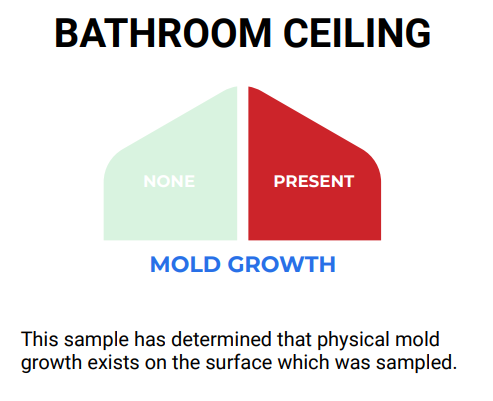
Laboratory surface sample result
Surface Sample: Mold Growth Confirmed
The bathroom ceiling swab identified Cladosporium, with the laboratory reporting light fungal growth.
Cladosporium is commonly found in outdoor environments but can also grow indoors when moisture conditions are favorable.
Air Sample: A Different Picture
The bathroom air sample produced the following results:
Measurement Bathroom
Total fungal spores 200 spores/cubic meter
Aspergillus/Penicillium 187 spores/cubic meter
Basidiospores 13 spores/cubic meter
The outdoor sample contained 10,053 total fungal spores/cubic meter which was much higher than the bathroom sample at the time of testing.
At first, these results may seem confusing. If mold was growing on the ceiling, why were the indoor air readings lower than the outdoor readings?
The answer is that the two samples measured different things. The surface swab showed that mold was growing on a specific are of the ceiling. The air sample showed how many fungal spores were floating in the bathroom during the sampling period.
Mold growing on a surface does not always release enough spores to noticeably affect a single air sample. Air results can also change depending on ventilation, recent activity, humidity, and other conditions. Although the total indoor spore concentration was lower than outdoors, this comparison alone cannot determine whether and indoor mold condition exists.
Together, the visual inspection, particle readings, air sample, and surface sample gave us a more complete understanding of the situation. The surface sample confirmed mold growth, while the air sampled showed that airborne spore levels in the bathroom were lower than those measured outdoors at the time.
There is no single universally accepted number that determines whether an indoor mold level is safe or unsafe. Test results must be considered along with the conditions of the building and the possible moisture source.
Step 5: Looking Beyond the Mold
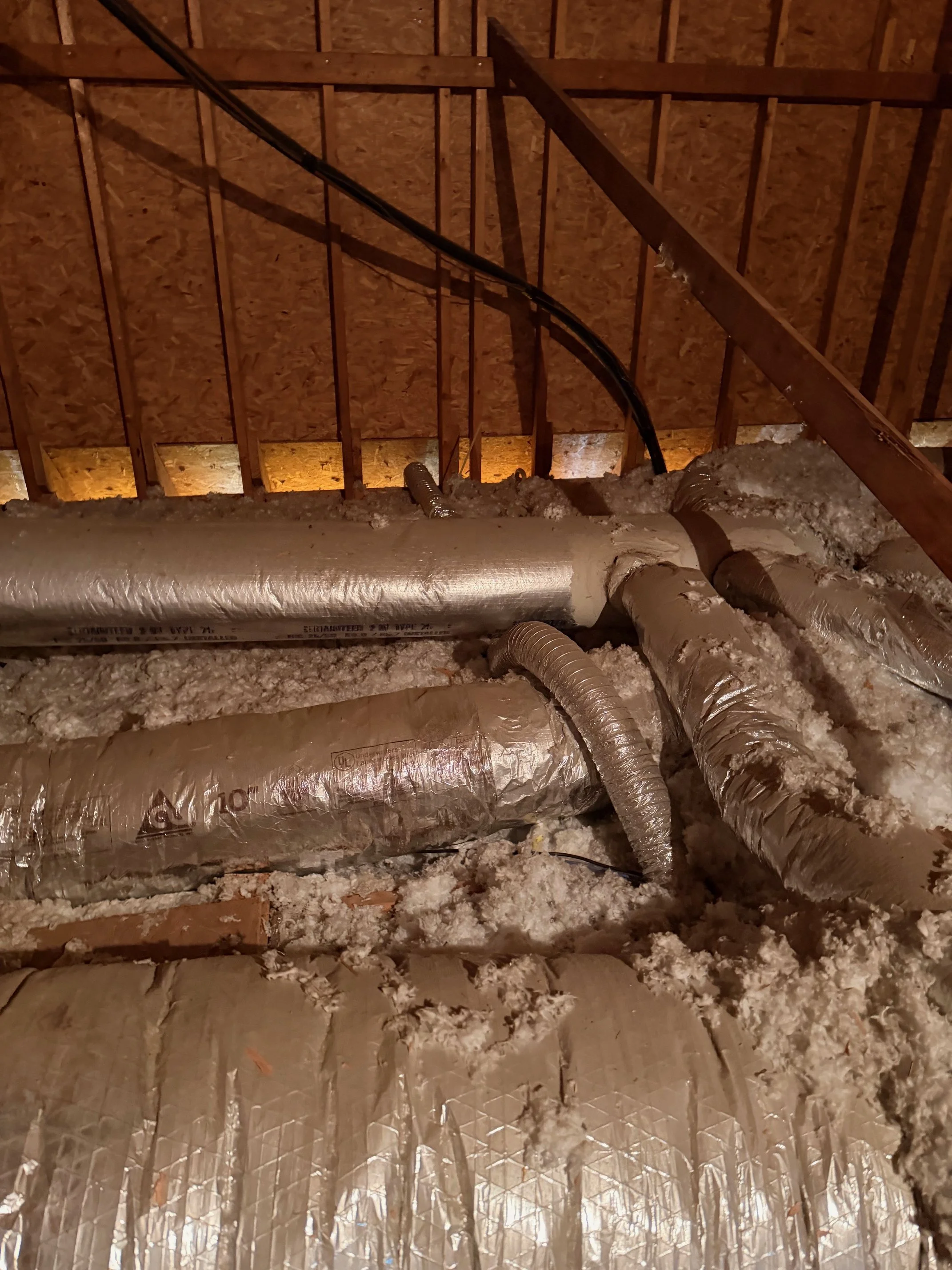
Confirming mold growth answered one question, but id did not explain why the mold developed. To find that answer, we investigated the bathroom’s ventilation system.
Because the growth surrounded the exhaust fan, we examined the fan’s ductwork in the attic. The flexible duct followed a complicated path around larger HVAC ducts. It passed beneath one duct, over another and beneath additional ductwork before reaching its termination point at the soffit.
This type of routing may restrict airflow and reduce the fan’s ability to remove humid air from the bathroom.
A dehumidifier has since been used to dry the affected drywall. The next steps are to address the mold growth and evaluate the exhaust system for possible improvements.
Why Finding the Moisture Source Matters
Cleaning or repairing mold-damaged materials without correcting the moisture problem can allow mold to return.
That is why a complete investigation looks beyond the visible growth. It also considers how moisture entered the area, whether ventilation is working properly, and what changes may help prevent the problem from happening again.
At Mangrove Air & Environmental, LLC, our goal is to help homeowners understand both whether mold is present and what conditions may be contributing to it.
Coming Next: What’s Happening in the Attic?
In Part 3, we’ll take a closer look at the bathroom exhaust duct, explain why its routing matters, and discuss steps that may improve moisture removal.
Mangrove Air & Environmental, LLC provides professional mold assessments and indoor air quality testing throughout Savannah and surrounding communities.
Concerned about mold, moisture, or indoor air quality in you home? Contact us to schedule an assessment.