A fall home maintenance checklist for coastal Georgia homeowners
October brings a welcome change to coastal Georgia. Temperatures begin to moderate, outdoor activities become more comfortable, and homeowners look forward to giving their air conditioners a break.
But there's one thing Savannah homeowners shouldn't forget: moisture problems don't disappear just because summer is ending.
Humidity Doesn't Follow the Calendar
Even during cooler months, coastal Georgia can experience periods of high humidity.
Indoor moisture can come from several sources, including plumbing leaks, inadequate ventilation, condensation, and water entering from outside the home.
And when moisture remains trapped in building materials, conditions may become favorable for mold growth.
Five Things to Check Around Your Home This Fall
1. Inspect your windows and doors
Look for condensation, water stains, deteriorating seals, or soft materials around window frames and door thresholds.
2. Check your gutters and downspouts
Leaves and debris can prevent water from draining properly. Make sure downspouts direct water away from the foundation.
3. Look beneath sinks and around plumbing
Small, unnoticed leaks can cause significant moisture damage over time. Check for staining, damp cabinets, and deteriorating materials.
4. Monitor indoor humidity
A small digital hygrometer can help you keep track of moisture levels inside your home. Aim for 30%–50% relative humidity when practical.
5. Inspect areas with limited airflow
Closets, storage rooms, and areas behind furniture along exterior walls may receive less air circulation. Watch for dampness, condensation, or musty odors.
Don't Forget Bathroom Ventilation
Bathrooms are especially vulnerable to moisture accumulation because of showers, baths, and other activities that introduce water vapor into the air.
An exhaust fan that is undersized, poorly maintained, or not venting properly may allow excess humidity to linger.
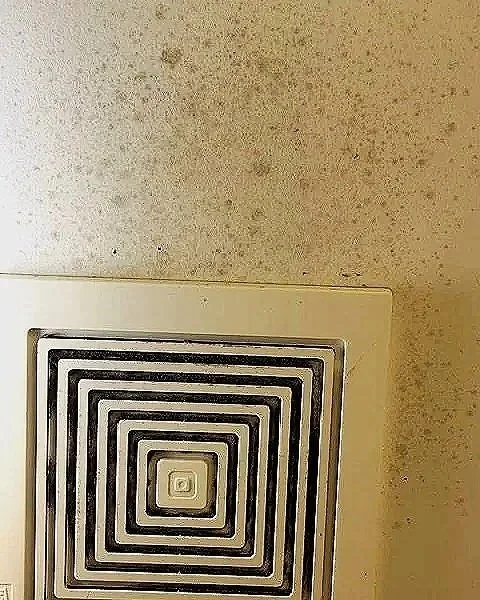
Dark spotting around a bathroom exhaust fan can be a warning sign of moisture or ventilation problems. but what’s really happening above the ceiling? In an upcoming Mangrove Air case study, we’ll share what we discovered during an actual residential investigation.
Homeowners should make sure bathroom exhaust fans discharge outdoors and operate during showers and for approximately 20 minutes afterward.
Why Early Detection Matters
One of the most important things homeowners can do is address moisture problems promptly.
The Environmental Protection Agency recommends drying wet building materials within 24–48 hours, when possible, to help prevent mold growth.
Identifying and correcting the source of moisture is essential. Simply cleaning or covering a stain without addressing the underlying problem may allow the issue to return.
Not Every Moisture Problem Is a Mold Problem
Finding damp materials doesn't automatically mean mold is present.
A professional assessment can help evaluate moisture conditions, document observations, and determine whether additional investigation or sampling is appropriate.
At Mangrove Air & Environmental, LLC, we believe homeowners deserve clear, objective information about their indoor environment.
Our assessments focus on identifying potential concerns and helping homeowners understand appropriate next steps.
Protect Your Home This Fall
A little preventive maintenance today can help avoid more expensive moisture problems in the future.
If you've discovered unexplained dampness, recurring odors, or other indoor air quality concerns, Mangrove Air & Environmental is here to help.
Proudly serving homeowners throughout the greater Savannah area.