Why Changing you air filter may not be the protection you think…
Most homeowners know they should change their HVAC filters regularly. But have you ever wondered what is happening inside the rest of your heating and cooling system?
In coastal Georgia, where high humidity is a part of everyday life, your HVAC system does more than keep your home comfortable. It also plays an important role in controlling indoor moisture.
More Than Just Dust
Your HVAC system circulates air throughout your home. Along the way, dust, pollen, and other airborne particles can accumulate in filters and internal system components.
Cooling systems also produce condensation as they remove moisture from the air. When functioning properly, that water drains away. However, clogged filters, blocked condensation lines, dirty drain pans, or other moisture problems can create conditions that support microbial growth.
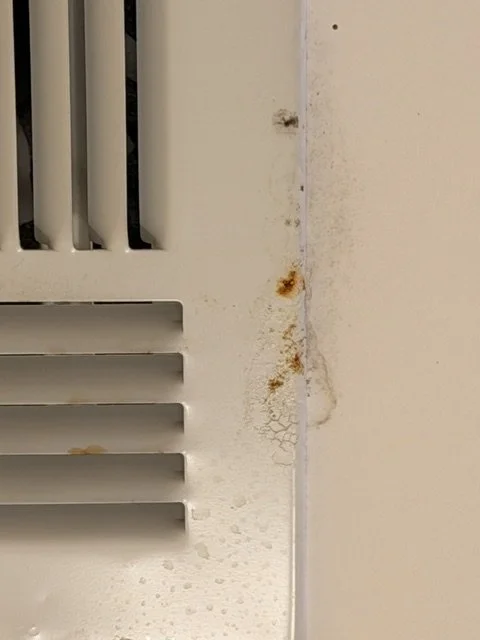
Discoloration and staining around this bathroom HVAC register may indicate moisture-related conditions that deserve further investigation.
Signs Worth Investigating
Pay attention to these potential warning signs:
· Musty odors when your air conditioning starts
· Visible moisture or staining around vents
· Condensation on supply registers or nearby surfaces
· Recurring water around the air handler
· Persistent indoor humidity despite running your air conditioner
What Can Homeowners Do?
Regular HVAC maintenance is on of the best preventive steps you can take.
Replace air filters according to the manufacture’s recommendations, schedule professional system maintenance, and make sure condensate drain lines remain clear.
Consider purchasing an inexpensive indoor humidity monitor. Ideally, indoor relative humidity should remain between 40% and 60%.
When Should You Consider an Indoor Air Quality Assessment?
If you’ve noticed persistent odors, unusual moisture, or other concerns that routine HVAC maintenance hasn’t resolved, an independent assessment can help identify areas needing further investigation.
At Mangrove Air & Environmental, LLC, we provide residential indoor air quality and mold assessments, including appropriate air and surface sampling, moisture evaluations and environmental observations.
Concerned about your home’s indoor air quality?
Contact Mangrove Air & Environmental to discuss whether an assessment is appropriate for your situation.
Serving Savannah, Pooler, Richmond Hill, Skidaway Island, Tybee Island, and surrounding communities.