When was the last time you thought about the space beneath your home?
For many homeowners, the answer is probably not recently!
We regularly maintain our roofs, gutters, heating and cooling systems, and landscaping. But the crawl space is often forgotten until a musty odor, moisture problem, or other concern draws attention to it.
In Savannah and throughout coastal Georgia, crawl spaces can experience significant moisture challenges because of our warm temperatures, high humidity, and frequent rainfall.
Understanding what happens beneath your home is an important part of protecting your indoor environment.
Why Are Older Homes Particularly Worth Checking?
Many homes built in the 1950s, 1960s, and earlier were constructed with traditional vented crawl spaces.
These openings were intended to promote air circulation and help moisture escape.
However, ventilation alone doesn't guarantee dry conditions.
When warm, humid outdoor air enters a cooler crawl space, the air may cool enough for moisture to condense on ductwork, plumbing, and structural surfaces.
This is particularly relevant in coastal Georgia, where outdoor humidity can remain elevated for much of the year.
Modern moisture management strategies often focus on controlling moisture sources rather than simply increasing ventilation.
Where Does Crawl Space Moisture Come From?
Several conditions can contribute to elevated moisture beneath a home.
Moisture from the ground
Exposed soil continually releases water vapor. Without an effective ground vapor barrier, this moisture can increase crawl space humidity.
Poor drainage
Rainwater collecting near the foundation, improperly directed downspouts, or grading that slopes toward the house can allow water to enter or accumulate beneath the home.
Condensation
Warm, humid air contacting cooler surfaces can produce condensation, even when there are no active plumbing or roof leaks.
Plumbing leaks
Small leaks beneath a house may go unnoticed for extended periods, creating localized damp conditions.
Air movement and ventilation
Open foundation vents, gaps, and mechanical systems can affect temperature and humidity within the crawl space. Depending on outdoor and indoor conditions, ventilation may help or worsen moisture problems.
Five Warning Signs of Crawl Space Moisture
Homeowners should be aware of these potential indicators:
Musty odors: Persistent earthy or damp smells, particularly near floors or lower levels.
Visible staining or discoloration: Changes in the appearance of floor joists, subflooring, or other surfaces.
Damp insulation: Insulation that appears wet, deteriorated, or detached from the floor system.
Condensation: Moisture collecting on pipes, ducts, or other cool surfaces.
Elevated humidity: High relative humidity that persists even when there is no visible standing water.
These signs do not automatically confirm mold growth, but they can indicate conditions that warrant investigation.
Can Crawl Space Air Enter Your Home?
Yes.
Air moves through buildings in response to temperature differences, pressure changes, wind, and mechanical ventilation.
Gaps around plumbing penetrations, electrical openings, ductwork, and other pathways can allow air from the crawl space to enter occupied living areas.
If the crawl space contains excessive moisture, odors, or airborne contaminants, some of those conditions may influence indoor air quality.
This is one reason crawl space moisture should not be considered an isolated problem.
Measuring Conditions Instead of Guessing
Not every crawl space has a moisture problem, and not every dark stain is mold.
A proper environmental assessment focuses on observable conditions and measurements.
Depending on accessibility and the circumstances, this may include:
Measuring temperature and relative humidity
Checking building materials for elevated moisture
Documenting visible staining or suspected microbial growth
Evaluating potential moisture sources
Determining whether microbial sampling is appropriate
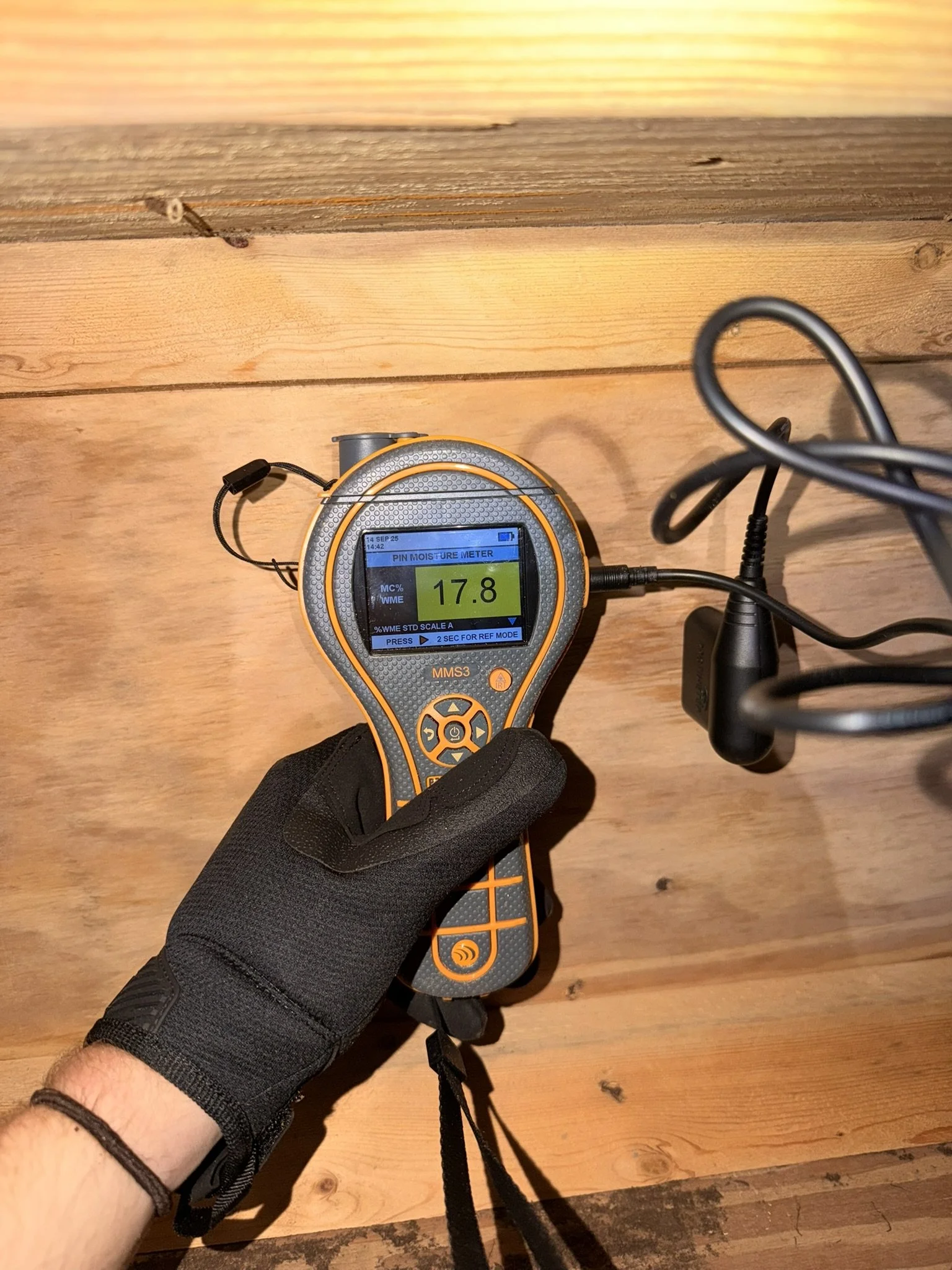
Sampling is not always necessary. Identifying the source of moisture and understanding the conditions supporting potential microbial growth are essential first steps.
Protecting Your Home from the Ground Up
In coastal Georgia, moisture management is a year-round responsibility.
Whether you live in a newer home or a house that has stood for generations, understanding conditions beneath your floors can help you identify problems before they become more extensive.
At Mangrove Air & Environmental, LLC, we help homeowners investigate moisture conditions, potential mold growth, and indoor air quality concerns.
Our goal is to provide objective information so you can make informed decisions about your property.
Noticing a musty odor or concerned about moisture beneath your home? Contact Mangrove Air & Environmental to discuss a professional assessment.
Proudly serving Savannah, Pooler, Richmond Hill, and surrounding coastal Georgia communities.